
Introduction: The Growing Importance of CNC Machining Centers
In today’s competitive manufacturing environment, productivity, accuracy, and flexibility are critical to success. Among the most advanced machine tools used in modern production, the CNC machining center stands out as a cornerstone of precision manufacturing. Designed to perform multiple machining operations in a single setup, CNC machining centers have become indispensable across industries such as automotive, aerospace, medical, electronics, and industrial equipment manufacturing.
A CNC (Computer Numerical Control) machining center integrates milling, drilling, tapping, and boring operations into one automated system. By combining high-speed spindles, automatic tool changers, and advanced control software, machining centers significantly reduce setup time, improve accuracy, and enhance production efficiency. As Industry 4.0 and smart manufacturing continue to evolve, CNC machining centers remain at the core of modern industrial production.

What Is a CNC Machining Center?
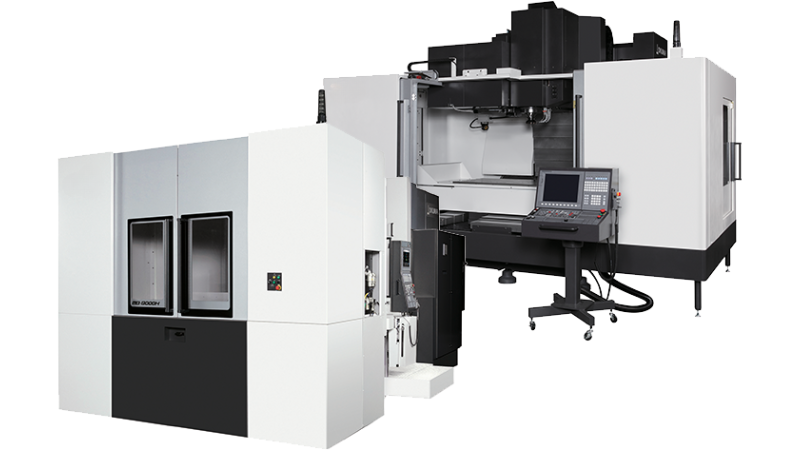
A CNC machining center is a computer-controlled machine tool capable of performing multiple machining operations automatically. Unlike conventional CNC milling machines, machining centers are equipped with an automatic tool changer (ATC) and enclosed work areas, allowing uninterrupted machining with minimal human intervention.
The machine operates based on pre-programmed G-code instructions generated from CAD/CAM software. These instructions control spindle rotation, tool selection, feed rates, cutting depth, and axis movement with high precision. CNC machining centers can perform complex operations on a single workpiece without requiring repositioning, ensuring consistent quality and tight tolerances.
Because of their versatility and automation, machining centers are widely used for both high-volume production and complex precision components.
Key Components of a CNC Machining Center
The performance and reliability of a CNC machining center depend on several essential components:
1. Spindle
The spindle rotates cutting tools at high speeds and determines machining performance, surface finish, and material removal rate.
2. Automatic Tool Changer (ATC)
The ATC stores multiple tools and automatically switches them during machining, reducing downtime and manual handling.
3. Worktable
The worktable securely holds the workpiece and moves along programmed axes to position it accurately during operations.
4. CNC Controller
The controller interprets machining programs and synchronizes all machine movements with extreme accuracy.
5. Enclosure and Coolant System
Enclosures improve safety and cleanliness, while coolant systems enhance tool life and surface quality.

Types of CNC Machining Centers
CNC machining centers are available in various configurations to meet different manufacturing needs.
1. Vertical Machining Center (VMC)
In a VMC, the spindle is oriented vertically. These machines are widely used due to their simplicity, cost-effectiveness, and suitability for general-purpose machining.
2. Horizontal Machining Center (HMC)
HMCs feature a horizontally oriented spindle and are ideal for high-volume production. They offer better chip evacuation and faster cycle times.
3. 5-Axis Machining Center
5-axis machining centers allow simultaneous movement along five axes, enabling the production of complex geometries in a single setup. These machines are essential in aerospace and medical manufacturing.
4. Double Column Machining Center
Used for large and heavy components, offering high rigidity and stability.
Materials Used in CNC Machining Centers
CNC machining centers can process a wide range of materials, making them extremely versatile.
Metals
- Aluminum
- Stainless steel
- Carbon steel
- Brass and copper
- Titanium
Plastics
- ABS
- Nylon
- Polycarbonate
- PEEK
- Acrylic
High-Performance Alloys
- Inconel
- Tool steel
- Aerospace-grade alloys
Material selection depends on strength requirements, thermal resistance, corrosion resistance, and cost.
CNC Machining Center Process: Step-by-Step
- CAD Design
Engineers design the component using CAD software, defining dimensions and tolerances. - CAM Programming
The CAD model is converted into machining instructions using CAM software. - Machine Setup
The workpiece is fixed on the table, tools are loaded into the ATC, and offsets are calibrated. - Machining Operation
The machining center performs milling, drilling, tapping, and finishing operations automatically. - Inspection and Quality Control
Finished parts are inspected using precision measuring tools such as CMMs and micrometers.
Advantages of CNC Machining Centers
- High Precision and Accuracy
- Reduced Setup Time through multi-operation capability
- Improved Productivity with automation and ATC
- Consistent Quality and Repeatability
- Lower Labor Dependency
- Capability to Machine Complex Parts
These advantages make CNC machining centers ideal for modern high-demand manufacturing environments.
Applications of CNC Machining Centers Across Industries
- Automotive Industry
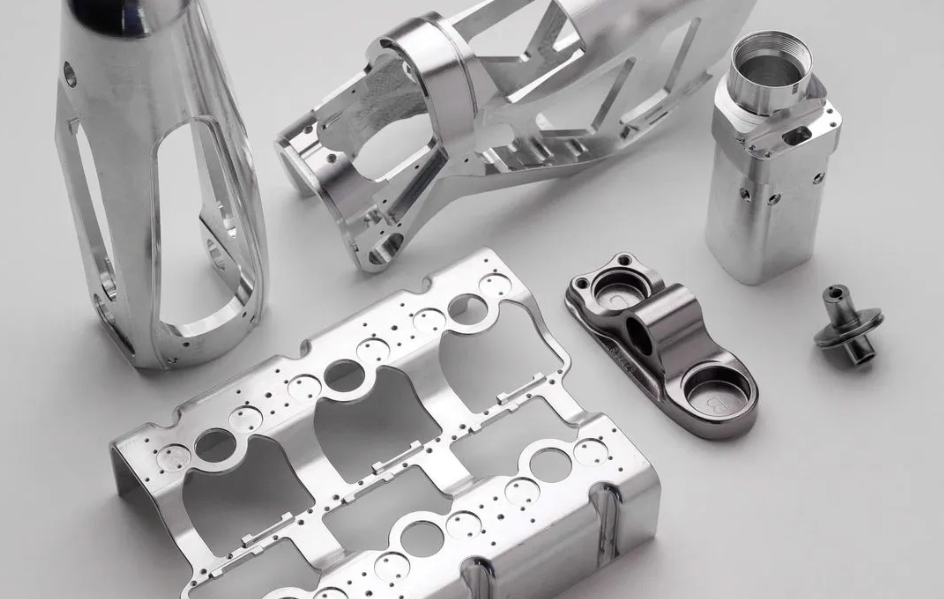
Engine components, brackets, transmission housings, and tooling parts.
- Aerospace Industry
Structural components, turbine housings, and precision fittings.
- Medical Industry
Implants, surgical instruments, and diagnostic equipment parts.
- Electronics Industry
Heat sinks, enclosures, and precision connectors.
- Industrial Machinery
Custom fixtures, molds, dies, and machine components.
Modern Advancements in CNC Machining Center Technology
Technological advancements continue to enhance machining center performance:
- High-Speed Machining (HSM) for faster cycle times
- 5-Axis Simultaneous Machining for complex geometries
- Automation and Robotics Integration
- Smart Monitoring and IoT Connectivity
- Energy-Efficient Drives and Systems
These innovations support smart factories and lights-out manufacturing.
Conclusion: CNC Machining Centers as the Core of Modern Manufacturing
CNC machining centers represent the evolution of precision machining, combining versatility, automation, and accuracy in a single platform. Their ability to perform multiple operations in one setup makes them indispensable for manufacturers seeking efficiency, scalability, and consistent quality.
As manufacturing continues to move toward digitalization and smart automation, CNC machining centers will remain a critical investment for industries worldwide. From high-volume production to complex precision components, they continue to drive innovation and industrial excellence.