
Precision, Efficiency, and Innovation in Modern Metal Manufacturing
Introduction: The Role of Die Casting in Modern Industry
In the world of precision manufacturing, die casting stands out as one of the most efficient and cost-effective methods for producing high-quality metal components. From automotive parts and aerospace structures to electronics housings and industrial equipment, die casting is a critical process that enables mass production of complex, durable, and dimensionally accurate metal parts.
By injecting molten metal into steel molds under high pressure, die casting combines speed, consistency, and strength essential qualities for modern engineering. The process not only enhances production efficiency but also delivers smooth surface finishes and tight tolerances, making it the preferred choice across multiple industries.
In this article, we’ll explore what die casting is, how it works, its key advantages, applications, and how technological innovations continue to transform this century-old manufacturing method.

What Is Die Casting?
Die casting is a metal casting process that involves forcing molten metal into a precisely machined mold, known as a “die,” using high pressure. The die is made from hardened steel and designed to create complex shapes with smooth or textured surfaces.
The process is highly automated, allowing manufacturers to produce thousands of identical parts with minimal variation. Common metals used in die casting include:
- Aluminum – Lightweight, corrosion-resistant, and strong, ideal for automotive and aerospace applications.
- Zinc – Excellent for intricate shapes and fine details, often used in electronics and hardware.
- Magnesium – Lightweight with superior strength-to-weight ratio, used in portable devices and machinery.
- Copper and Brass – Known for high conductivity and mechanical performance in electrical components.
How the Die Casting Process Works
The die casting process typically follows a series of controlled steps designed to ensure accuracy, speed, and durability:
1. Mold Design and Preparation
The die, usually made from hardened tool steel, is designed in two halves — the fixed half and the ejector half. Engineers use CAD/CAM software to design molds that optimize metal flow, cooling, and ejection.
2. Melting the Metal
The chosen metal (such as aluminum or zinc) is melted in a furnace and maintained at a controlled temperature to ensure consistent fluidity.
3. Injection
Molten metal is injected into the die cavity under high pressure — typically between 1,500 and 30,000 psi — ensuring that the mold fills completely before solidification.
4. Cooling and Solidification
Once the molten metal has filled the die, it cools and hardens quickly. The rapid solidification ensures excellent dimensional stability and surface finish.
5. Ejection and Trimming
The die opens, and ejector pins push the finished casting out. Any excess metal (known as flash) is trimmed off to achieve the final shape.
6. Finishing and Quality Inspection
Castings may undergo secondary operations such as machining, surface finishing, painting, or powder coating. Rigorous quality checks, including X-ray inspection or coordinate measuring, ensure dimensional accuracy and structural integrity.

Types of Die Casting Processes
There are two main types of die casting methods, each suited for specific materials and production needs:
1. Hot-Chamber Die Casting
In this process, the metal is melted inside the casting machine itself. The molten metal is then injected directly into the die. This method is commonly used for zinc, magnesium, and other low-melting-point alloys.
Advantages: Faster cycle times and efficient production for smaller, complex parts.
2. Cold-Chamber Die Casting
In cold-chamber casting, the molten metal is ladled into a separate chamber before being injected into the mold. This technique is ideal for aluminum and copper alloys, which require higher melting points.
Advantages: Suitable for metals with high melting temperatures and large components.
Advantages of Die Casting
1. High Dimensional Accuracy
Die casting delivers components with tight tolerances, reducing or eliminating the need for secondary machining.
2. Smooth Surface Finish
Parts have a naturally clean and smooth finish, ideal for decorative or precision applications.
3. Excellent Mechanical Properties
Die-cast metals exhibit superior strength and durability compared to other casting methods.
4. Cost Efficiency in High Volumes
Once the die is created, the process supports rapid, repeatable production at a low cost per part.
5. Design Flexibility
Complex geometries, thin walls, and intricate details can be achieved with ease, giving engineers greater design freedom.
6. Reduced Waste
Modern die casting minimizes metal waste through recycling and reusing materials, contributing to sustainability goals.
Applications of Die Casting Across Industries
1. Automotive
The automotive sector is one of the largest consumers of die-cast components. Aluminum die casting is widely used for engine blocks, transmission housings, brackets, and structural components, helping manufacturers achieve lightweight designs and improved fuel efficiency.
2. Aerospace
High-strength magnesium and aluminum die castings are used in aircraft interiors, housings, and structural parts that demand low weight and high performance.
3. Electronics
Die-cast enclosures, heat sinks, and connectors protect sensitive electronic components from heat and environmental exposure.
4. Industrial Machinery
Precision die-cast parts such as pump housings, gear cases, and machine brackets enhance equipment reliability and performance.
5. Consumer Products
Die casting supports the production of hardware, appliances, and decorative fixtures that require both strength and aesthetic appeal.
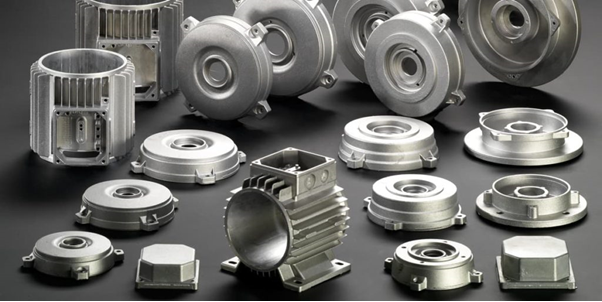
Modern Innovations in Die Casting
1. Vacuum Die Casting
This advanced method removes air from the mold cavity before injection, minimizing porosity and improving mechanical properties — perfect for high-performance applications.
2. Squeeze Die Casting
Combines casting and forging to produce parts with higher density, excellent surface finish, and superior strength.
3. Semi-Solid Casting
Uses metal in a partially molten state to achieve uniform microstructure and improved material properties.
4. Automation and Robotics
Robotic automation enhances precision, reduces cycle time, and improves worker safety in high-volume operations.
5. Simulation and Digital Twin Technology
Modern foundries use computer simulation to optimize die design, cooling rates, and metal flow — resulting in fewer defects and reduced production costs.
Choosing the Right Die Casting Partner
Selecting a reliable die casting company is crucial for achieving consistent quality and efficiency. A professional partner should offer:
- Expertise in tool design and material selection
- Advanced CNC machining and finishing capabilities
- Strict quality control and testing procedures
- Experience with custom and large-scale production
- Commitment to sustainability and process efficiency
Working with a trusted provider ensures precision-engineered parts, shorter lead times, and optimized production costs.
Conclusion: Die Casting — The Backbone of Modern Manufacturing
From small consumer devices to massive industrial machinery, die casting plays an indispensable role in shaping the modern world. Its ability to produce complex, lightweight, and durable metal components with unmatched consistency makes it a cornerstone of precision manufacturing.
As technology continues to evolve, innovations like automation, vacuum casting, and digital simulation are making die casting faster, cleaner, and more sustainable than ever before.
For businesses seeking high-performance metal parts at scale, die casting remains the ultimate solution combining engineering precision, production efficiency, and long-term reliability.